
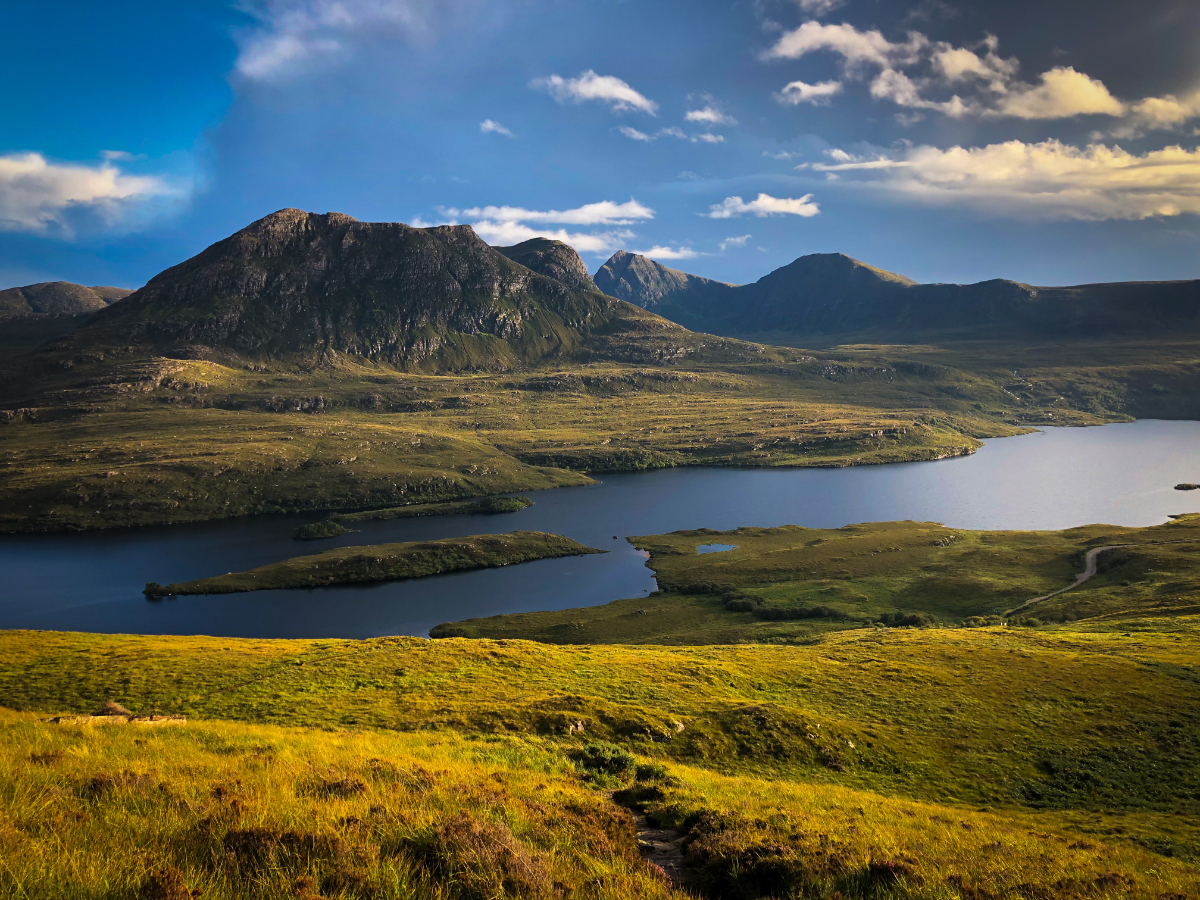
What is Cairngorms national park famous for? We explore the 9 National Nature Reserves across Cairngorms Park.
The Cairngorms: The Largest National Park in the UK
Of the fifteen national parks in the British Isles, the beautiful Cairngorms in the heart of the Scottish Highlands is the largest, covering 4,528 sq km or 1,748 sq miles. This makes it twice the size of the Lake District National Park, the second-largest national park in the UK. You can reach it travelling north of Edinburgh for 127 miles, with Inverness the closest city, 30 miles from the western edge of the park.
Given its size, the Cairngorms National Park Covers several Scottish cities and regions, including Moray, Angus, Perth, Kinross and Aberdeenshire. More than half of the land in the park is designated 'wild' and is of international importance under European Law. Within this are 46 Sites of Special Scientific Interest, 19 Conservation Areas and 12 Special Protection Areas, all thanks to its cultural heritage.
Local Cairngorms Attractions to Visit
Follow the links below to find out more about local Cairngorms attractions to visit.
National Nature Reserves across the Cairngorms National Park
The Cairngorms has 9 National Nature Reserves within its boundaries, which were created to protect the wildlife and natural landscapes found there.
Alongside protection, these reserves provide the perfect way for naturalists to escape into the wild and learn about Scotland's inimitable natural beauty. The 9 National Nature Reserves include:
Abernethy
Abernethy is an ancient village that was once the capital of the Pictish kingdom following the end of the Roman era.
The National Nature Reserve offers a way to travel back to these mystical times, with impossibly beautiful and rugged landscapes to explore with the naked eye or binoculars.
There are numerous nature centres as starting points for explorers on the southeast side of the park.
With all the amenities, complete guides and supplies you need for an adventure, there are numerous friendly villages throughout the park for you to visit.
Corrie Fee
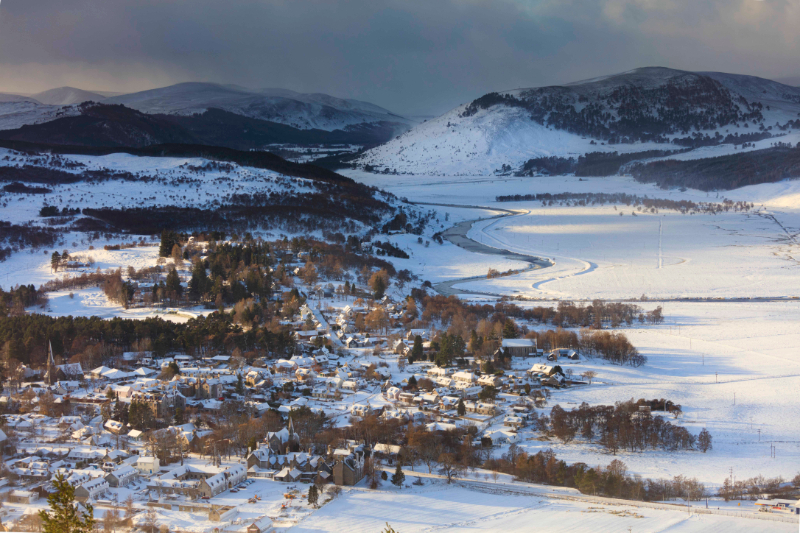
Corrie Fee is a giant glacial bowl carved into the mountains of Glen Clova, with Corrie Sharroch and Craig Rennet forming the joint Corrie Fee National Nature Reserve.
This is the ideal destination for lovers of flora and fauna, with many rare species populating the park area. In the air above, you can spot soaring golden eagles, while at ground level, you can find Alpine blue-sowthistle, globeflower, red campion and wild angelica.
Craigellachie
A short journey from Aviemore will take you to the Craigellachie National Nature Reserve. At all times of the year, this stunning set of ancient forests, crags, glades and lochs have scenery enough for any nature lover or history buff. From the peaks of the reserve, you'll have an uninterrupted view of the majority of the Cairngorms and its vast horizons.
Again, animal and plant enthusiasts will thoroughly enjoy themselves here. With various bird species, including buzzards and armies of silver birch trees, you can happily lose yourself wandering around this beautiful reserve for a few hours.
Glen Tanar
Glen Tanar in Royal Deeside is the ideal starting place for explorers journeying into the Cairngorms.
But for those looking for something more special, the Glen Tanar Ballroom offers an unparalleled wedding venue for your big day.
Outside, the rugged moorlands bedecked with heather provide a glorious backdrop alongside the forest paths and walking trails through the Caledonian pine.
Glenmore
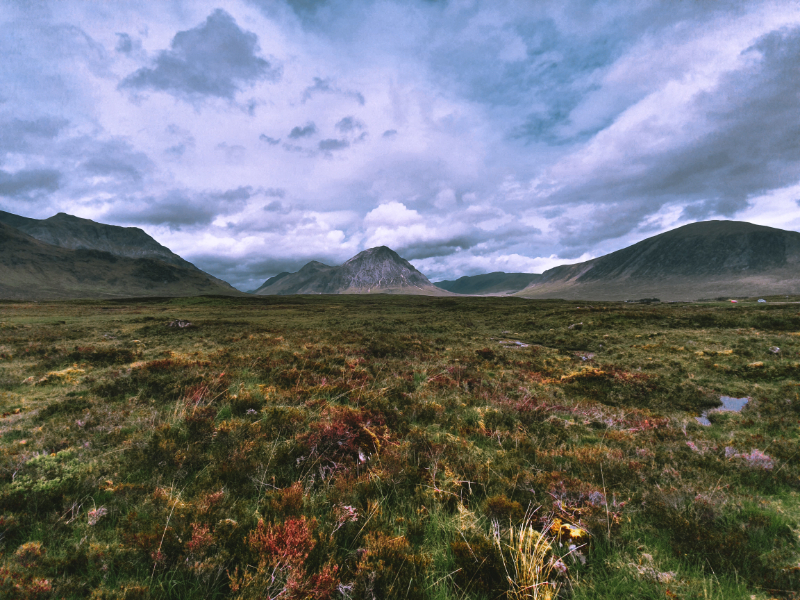
Glenmore Forest offers more of the stunning natural beauty the Cairngorms are famous for. From ancient woodlands and forests to towering mountains and glittering lochs, there's more than enough for adventurers to wander through in amazement.
Again, the local population comprises rare birds and flower species for ornithologists and botanists to enjoy.
Insh Marshes
These marshes are particularly important for local wildlife and are one of the best wetland habitats in Europe. The Insh Marshes are wildlife hotspots, home to numerous waterfowl species, from lapwing to redshank, snipe and curlew.
It lies within the floodplain of the River Spey (the longest river in the Cairngorms) in the centre of four major tourist areas: Kincraig, Kingussie, Strathspey and Badenoch, all filled with historic attractions and ancient ruins.
Invereshie & Inshriach
Draped over the northwest side of the Cairngorm plateau, Invershie and Inshriach is a patchwork of pinewood forests and rugged mountain ranges.
This area is most famous for the twisting and writhing roots of the Krummholz pines, the higher branches of which host various animals, from pine martens to red squirrels, crested tits and Scottish crossbills.
Dramatic moorland and bogs make up the higher reaches of the Invershie and Inshriach National Nature Reserve.
Above this stand the peaks of Carn Bàn Mòr and Sgòr Gaoith, a unique habitat full of special qualities for mountain hares, dotterel and ptarmigan.
Mar Lodge Estate
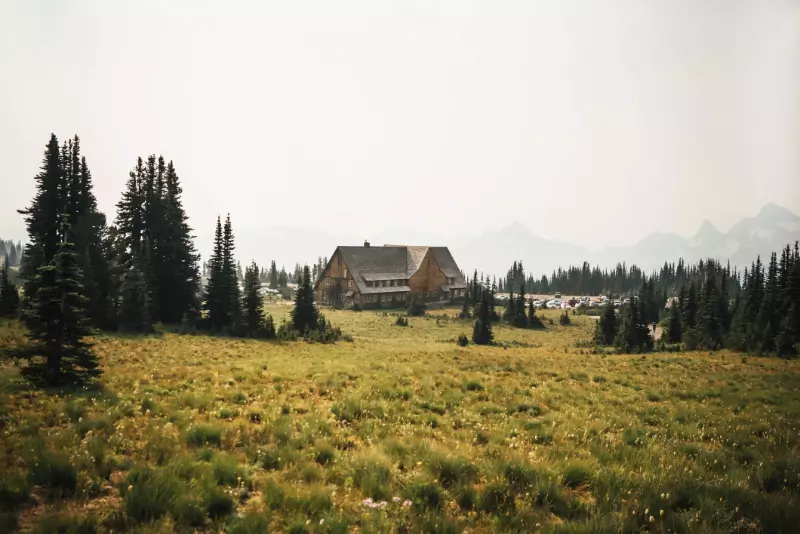
Mar Lodge Estate is a 19th-century hunting lodge that provides a welcomed respite from the hardy landscapes and surrounding hills. While in Queen Victoria's time, it was used for hunting the local red deer, now you can stay here without bringing your shotgun.
With over 29,000 hectares of the brilliant Scottish landscape, there's plenty to see from this brilliant location. More mountains and the Cairngorms' famous heather moorland and Caledonian pines for adventures to lose themselves in.
Muir Of Dinnet
The final National Nature Reserve on the list combines everything people love about the Cairngorms National Park. A wild combination of marshy wetlands, blankets of woodland and dramatic moors.
This area is the work of another glacier that carved its way through the landscape more than 10,000 years ago. Vat Gorge is one particular landmark left by the glacier, with the Burn O'Vat still trickling through the area.
Cairngorm Mountains
We have thousands of mountains in the UK, with Ben Nevis being our tallest at 4,411 feet (1,345 m). But do you know where you can find the next four of the five highest mountains? You guessed it - in the Cairngorms! These are:
Ben Macdui 4,295 feet (1,309 m)
Braeriach 4,252 feet (1,296 m)
Cairn Toul 4,236 feet (1,291 m)
Sgor an Lochain 4,127 (1,258 m)
The park is one giant plateau, with no better place in the UK for arctic mountain landscapes. Its namesake, Cairn Gorm, is the sixth-highest mountain in the UK, at 4,081 feet (1,244 m).
Among its impressive peaks are numerous 'Munro's' - mountains above 914 m high. Budding mountaineers who have conquered one of these can style themselves a 'Munro Bagger'.
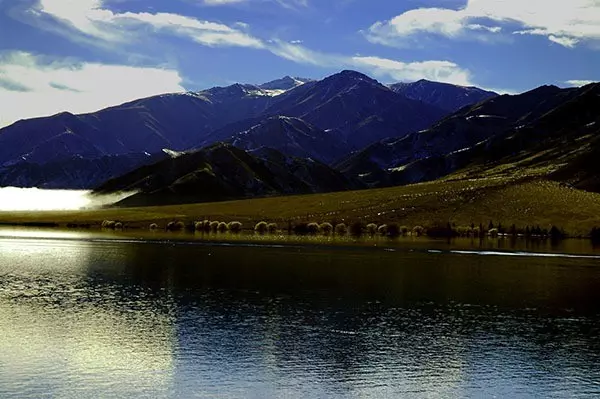
History of the national park
The idea to turn the region into a national park began in the 19th century when people became interested in preserving more of Britain's natural landscape from the encroaching industrial towns and cities. It wasn't until 1931 that the Cairngorms were proposed as a National Park for the Scottish people.
However, despite decades of constant recommendation to local and national committees, the Cairngorms were not officially considered for National Park status until the creation of the Scottish Parliament in 1999.
With the new government, Scottish Natural Heritage was free to establish the park's boundaries, and in 2003, the Cairngorms National Park was made official and entered into wider Scottish culture.
Wildlife & Natural History
As we've already seen, the Cairngorms National Park is a treasure trove of natural beauty and rugged wilderness ideal for rare and endangered species and plants. With its glacial past, the park is awash with peat-bottomed rivers, glacial lochs, wild moorland, soaring mountains and dense surviving Caledonian forests.
While this offers fantastic views for nature fans, it's also the perfect home for our native Scottish wildlife. In the ancient lochs, you're likely to find arctic charr, pike, otters and wild brown trout, while on the shores and in the surrounding woodlands, you'll find rare birds such as Ospreys.
Tourism is a vital part of the Cairngorms' economy, with naturalists able to contribute directly to preserving the heart-wrenchingly beautiful locations you can possibly imagine alongside the nature and Scottish history of the area. From visitors' centres to hunting lodges, the highland games and ski resorts, there's something for everyone.
Things to do in the Cairngorms
If there's one thing to do in the Cairngorms besides marvelling at the spectacular scenery, it's to visit the Cairngorm Mountain Centre.
There are several ski runs here during the winter months, eight red, six blue and seven green, for skiers and snowboarders alike.
However, if the snow isn't to your liking, you can wait for it to melt and head out on guided tours in the great outdoors and mountain bike trails throughout the mountainous landscapes surrounding the centre.
You might also consider the Northerly Dark Sky Park, one of many international dark sky parks worldwide, for some truly out-of-this-world views.
Are you looking for dog friendly holidays in the Speyside area? If you are planning a holiday or short stay in Speyside in Cairngorms National Park, we have some great luxury cottages available. For dog friendly Speyside accommodation follow the link below.